At STARLab, we advance intelligent autonomous systems that can perceive, reason, learn, and interact effectively with humans in dynamic and uncertain environments. Our research lies at the intersection of artificial intelligence, robotics and autonomous systems, and human-robot interaction, with an emphasis on developing human-centered, interpretable, and adaptive autonomy.
Our work integrates machine learning, human behavior and cognitive modeling, and learning-based decision-making and control to investigate both how autonomous systems interact with humans and how humans perceive, respond to, and adapt to autonomous behavior. We combine computational modeling and algorithm development with simulation, human-in-the-loop experimentation, and embodied autonomous platforms to bridge fundamental research with real-world applications.
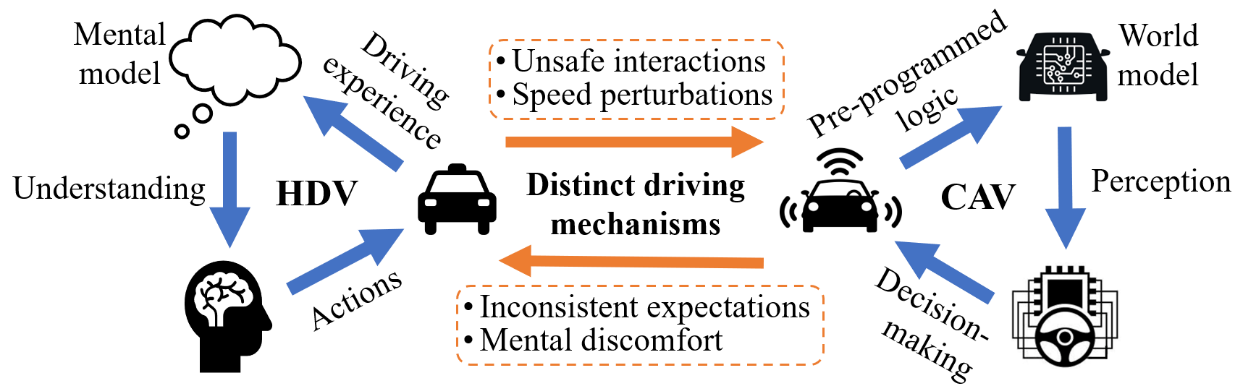
Developing autonomous systems that understand and account for human behavior, cognition, and expectations.
We investigate human-centered approaches to autonomous intelligence that enable safe, intuitive, and effective interactions between humans and autonomous systems. Our research integrates human behavior modeling, learning, and adaptive decision-making to develop autonomous systems capable of anticipating human responses, communicating intentions, and aligning their actions with human expectations. Building on prior research in human-centric and human-like autonomous control, this direction explores broader principles of socially intelligent autonomy across robotics and embodied autonomous systems.
Representative Work
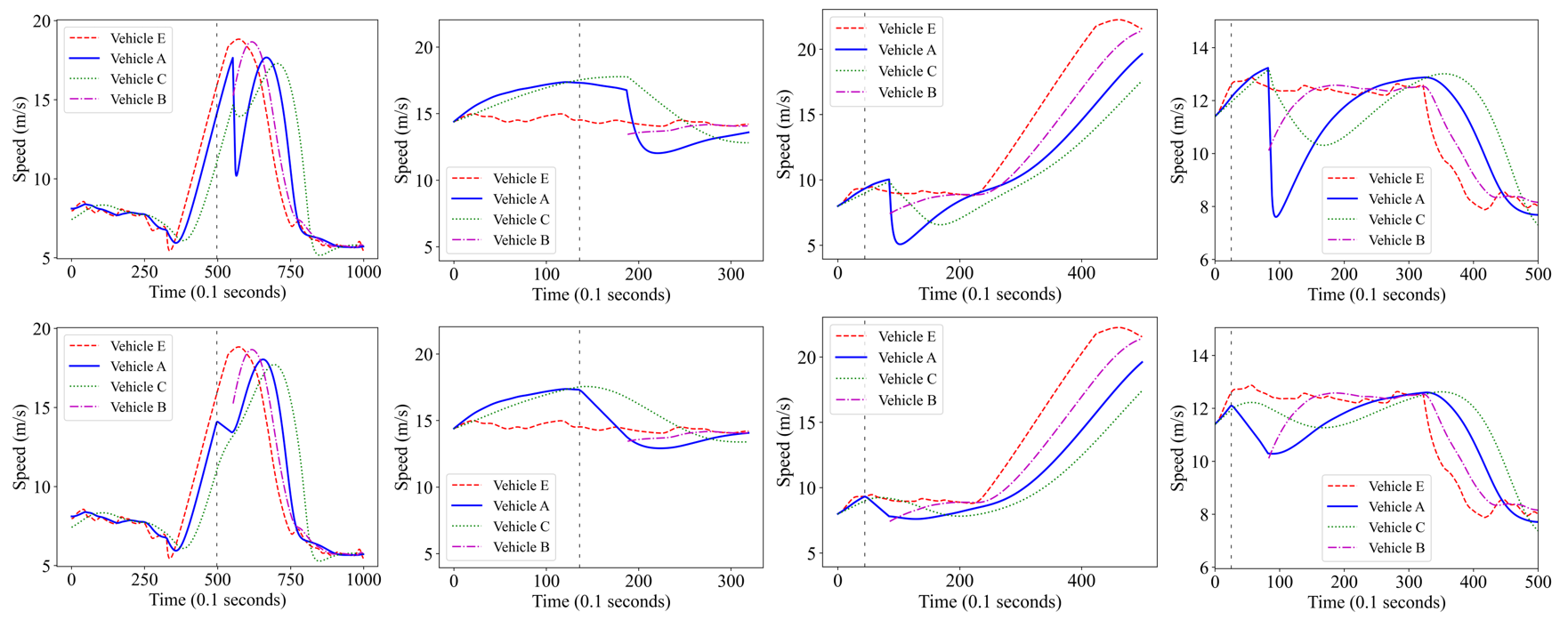
Liu, Y., & Peeta, S. (2025). Human-like lane-change control strategy for connected and autonomous vehicles to improve interactions with human-driven vehicles.Transportation Research Part C, 177, 105211. doi:10.1016/j.trc.2025.105211
Liu, Y., Zhou, A., Wang, Y., & Peeta, S. (2026). Navigating in mixed traffic: A human-centric approach to manage lane changes of human-driven vehicles.IEEE Transactions on Intelligent Transportation Systems, 27(6), 6574–6588. doi:10.1109/TITS.2026.3682923
Theme 2 — Learning-Based Decision-Making & Control
Advancing adaptive decision-making and control for autonomous systems operating in complex and uncertain environments.
We develop learning-based decision-making and control frameworks that enable autonomous systems to operate adaptively in dynamic and interactive environments. Our research draws on reinforcement learning, imitation learning, behavioral prediction, and advanced control methods to support intelligent planning, multi-agent coordination, and autonomous decision-making. We seek to integrate learning capabilities with control principles to achieve robust, efficient, and adaptive autonomy across diverse operating conditions.
Representative Work
Liu, Y., Zhou, A., Wang, Y., & Peeta, S. (2023). Proactive longitudinal control to preclude disruptive lane changes of human-driven vehicles in mixed-flow traffic.Control Engineering Practice, 136, 105522. doi:10.1016/j.conengprac.2023.105522
Liu, Y., Zhou, A., Wang, Y., & Peeta, S. Proactive longitudinal control to assist lane changes of human-driven vehicles in mixed traffic: Human-emulation approach.Automotive Innovation. Published online July 29, 2025, subsequently included in Volume 9 (2026), pp. 48–64. doi:10.1007/s42154-025-00357-9
Theme 3 — Generative AI for Autonomous Systems
Exploring generative and multimodal AI for integrated perception, reasoning, decision-making, and control.
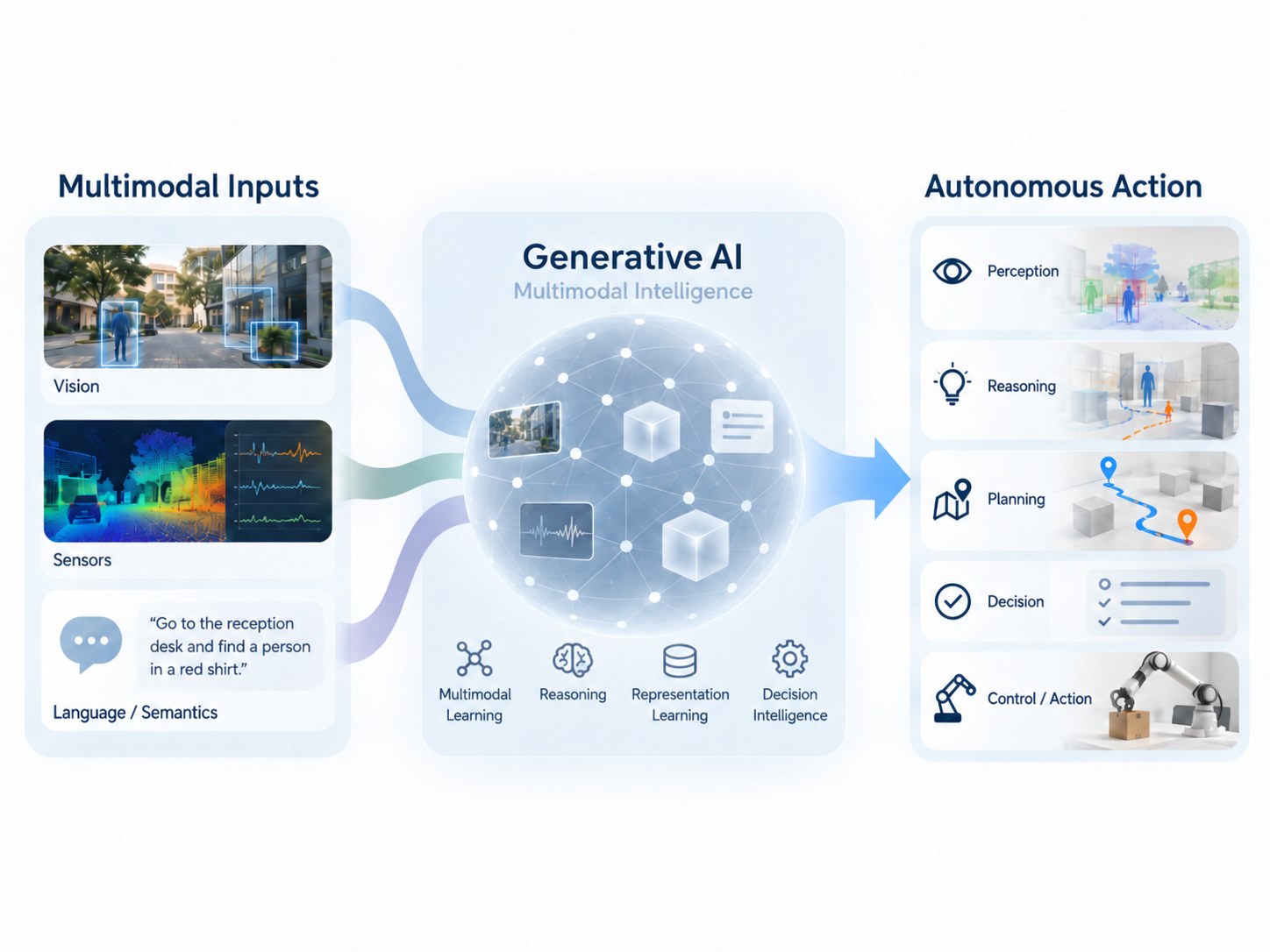
We explore the potential of generative artificial intelligence and multimodal foundation models to advance autonomous intelligence. Our research investigates approaches that integrate visual observations, sensor information, and semantic understanding to support intelligent reasoning and action generation. Particular interests include vision-language-action models, multimodal learning, and generative architectures for autonomous decision-making, with an emphasis on adaptability, generalization, and real-world deployment.
Theme 4 — Human Behavior, Cognition & Interaction
Understanding human behavior, cognitive processes, and adaptation during interactions with autonomous systems.
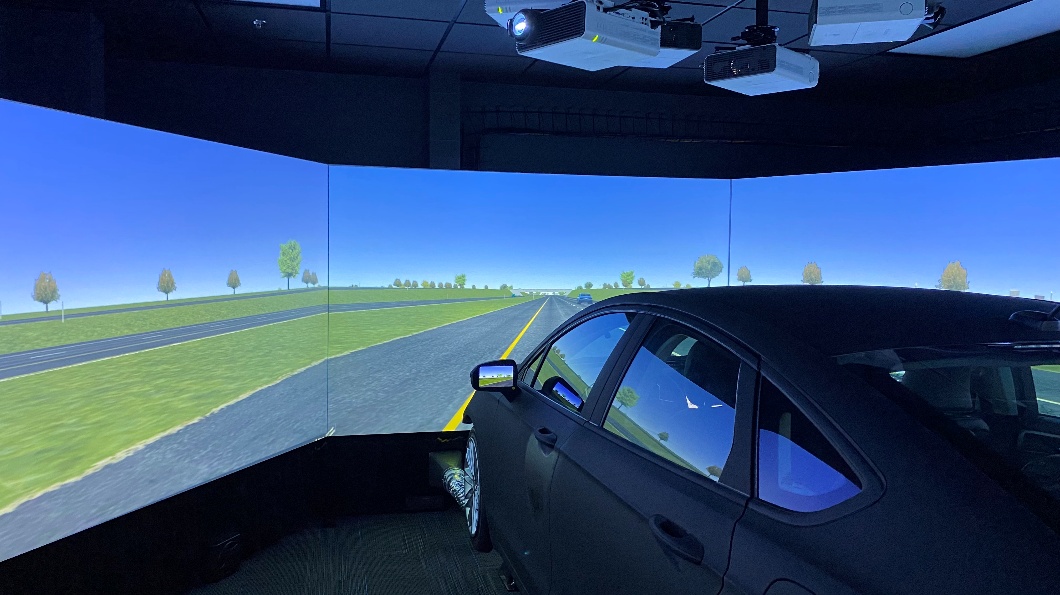
We investigate how humans perceive, understand, respond to, and adapt to autonomous systems through behavioral modeling and human-in-the-loop experimentation. Our research combines experimental studies, behavioral data, and multimodal human measurements to examine human decision-making, cognitive responses, and experience-dependent behavioral adaptation. These insights inform the development and evaluation of human-centered autonomous systems that better account for human capabilities, expectations, and changing interaction behaviors.
Representative Work
Zhou, A., Liu, Y., Tenenboim, E., Agrawal, S., & Peeta, S. (2023). Car-following behavior of human-driven vehicles in mixed-flow traffic: A driving simulator study.IEEE Transactions on Intelligent Vehicles, 8(4), 2661–2673. doi:10.1109/TIV.2023.3257962
Liu, Y., Agrawal, S., Tenenboim, E., Zhou, A., & Peeta, S. (2025). Lane-change behavior of human drivers in mixed traffic: A safety perspective.Transportation Research Board (TRB) 104th Annual Meeting, Washington, DC.
Intelligent Mobility & Transportation Systems
Transportation is both an important application domain for intelligent autonomy and a research field in its own right. Our research spans connected and autonomous vehicles, human driving behavior, transportation safety, and traffic operations.
By integrating artificial intelligence, autonomous-system technologies, and transportation modeling and analysis, we investigate how intelligent transportation technologies interact with humans and influence the safety, efficiency, and performance of transportation systems.