
Facilities
Facilities Overview
STARLab is developing an integrated experimental research environment that brings together immersive simulation, human-in-the-loop experimentation, scaled robotic platforms, full-scale autonomous vehicles, and multimodal sensing capabilities.
Our research infrastructure connects virtual and physical environments to support the development, testing, and evaluation of intelligent autonomous systems. By combining simulation, learning-based autonomy, human behavioral measurements, and embodied experimentation, we aim to bridge fundamental AI and robotics research with experimental validation under realistic operating conditions.
Integrated Research Capabilities
Sim-to-Real Autonomy Research
Our research environment is designed to support a multi-level simulation-to-real validation framework, connecting virtual simulation, scaled autonomous systems, and full-scale autonomous vehicles.
This integrated approach will enable the development and evaluation of perception, reasoning, planning, and control algorithms across different levels of physical complexity, from reproducible virtual scenarios to embodied experimental platforms.
Human-in-the-Loop Experimentation
Our human-in-the-loop research capabilities combine immersive simulation, behavioral observation, and multimodal human measurements to investigate interactions between humans and autonomous systems.
These capabilities are being developed to support controlled experiments examining human decision-making, cognitive responses, behavioral adaptation, and interaction with autonomous technologies.
Embodied AI and Multi-Agent Autonomy
Our scaled and full-scale autonomous platforms support research into embodied intelligence, perception, autonomous decision-making, and control.
The planned multi-vehicle robotic testbed will further enable investigations of cooperative autonomy, multi-agent interactions, and integrated sensing, communication, and control in physical environments.
Vehicle Engineering and Experimental Validation
STARLab also draws on Tennessee Tech's broader Vehicle Engineering resources, including electric and autonomous vehicles, charging infrastructure, vehicle-system equipment, and experimental testing facilities.
These resources provide complementary opportunities for vehicle-system integration, automotive research, experimental validation, and hands-on student training.
Research Platforms & Resources
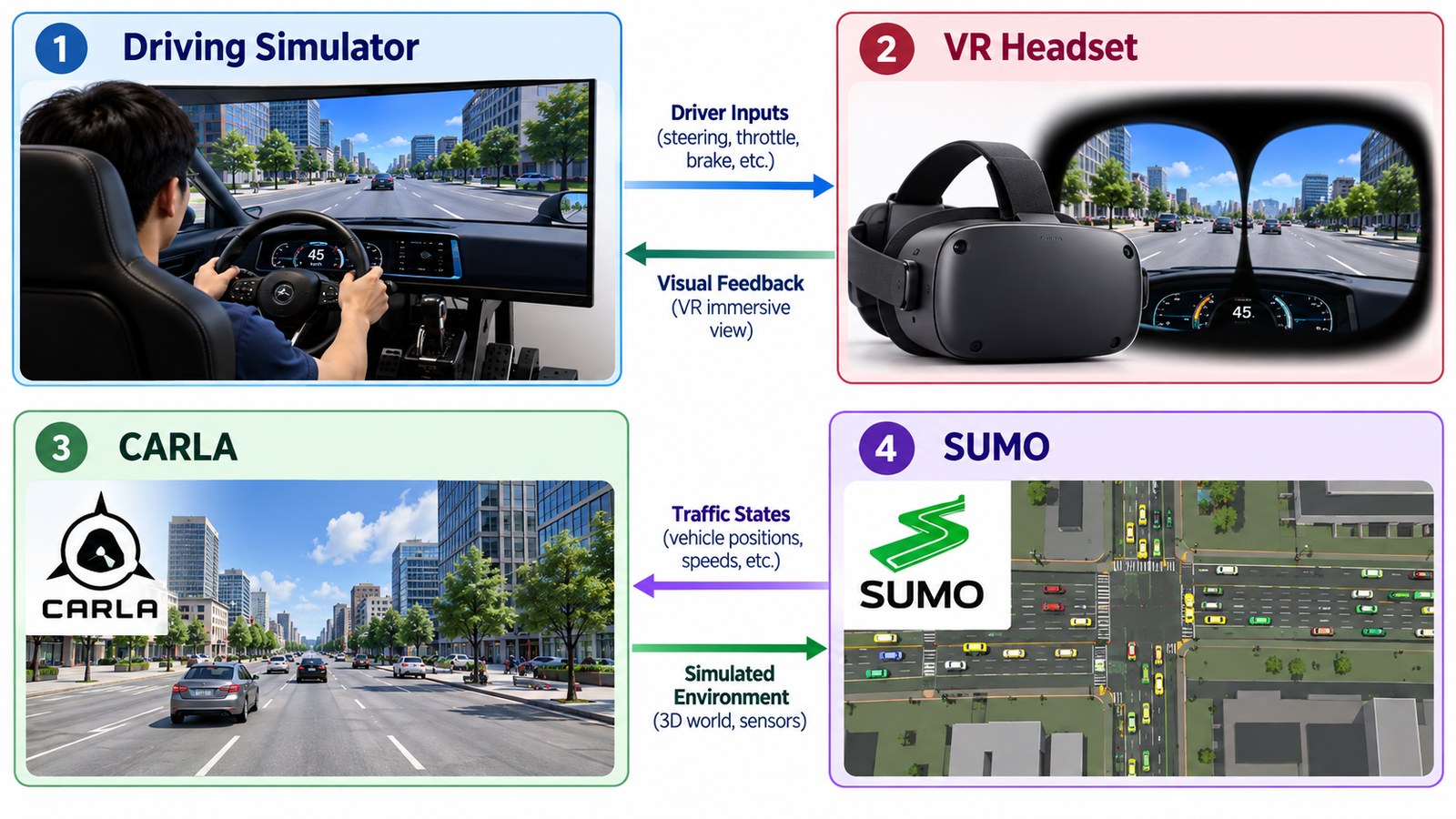
1. Immersive Simulation and Human-in-the-Loop Systems
A VR-based driving simulator is currently under development in STARLab's primary experimental space at Tennessee Tech. The planned platform integrates driving controls, immersive virtual environments, traffic simulation, and synchronized experimental data acquisition.
The simulator is designed to support repeatable human-in-the-loop experiments and systematic investigation of human behavior and interactions with autonomous systems.
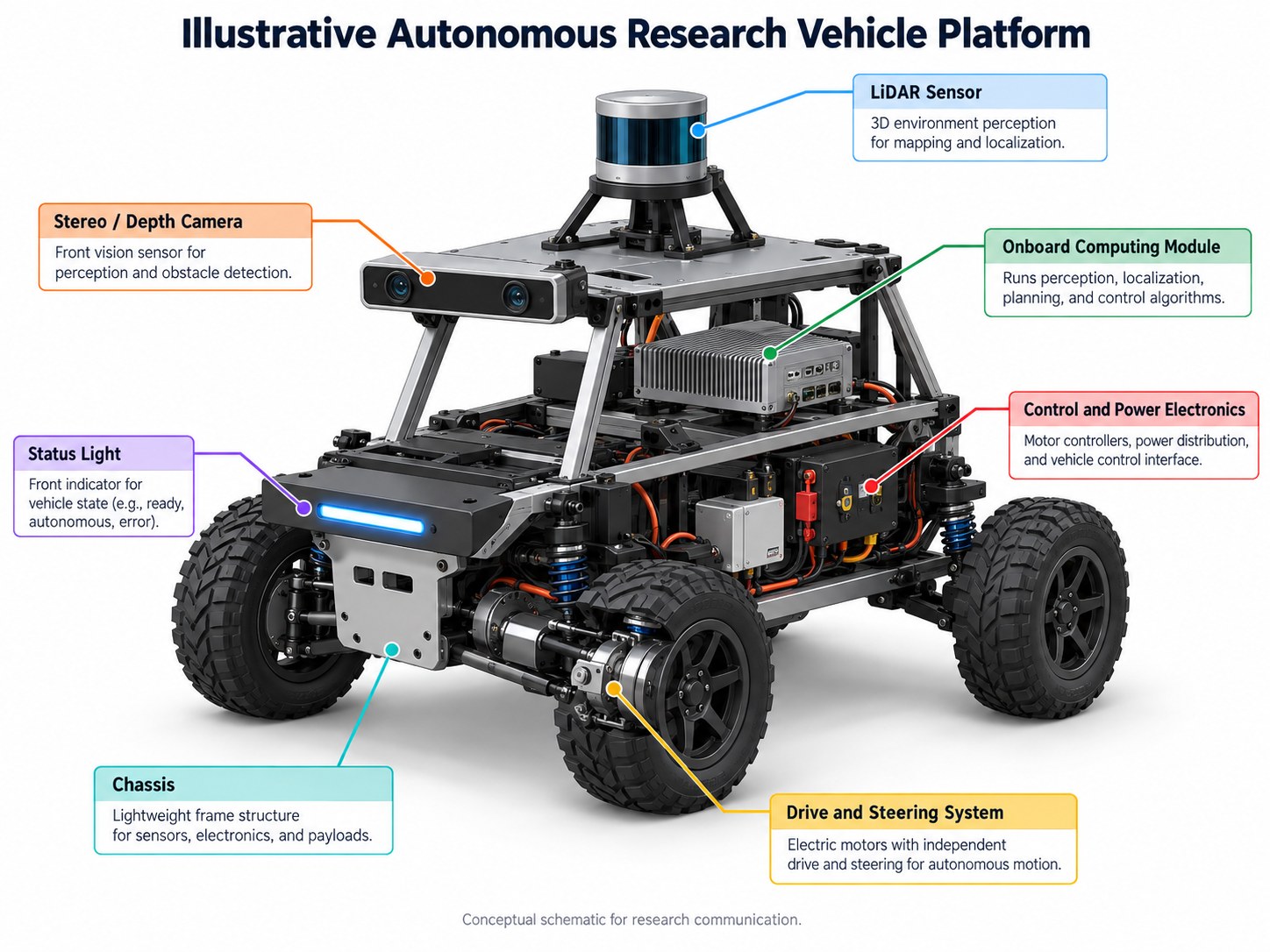
2. Scaled Autonomous Systems — Quanser Self-Driving Car Studio
A Quanser Self-Driving Car Studio with four QCar 2 scaled autonomous vehicles is planned as a physical robotic research platform.
The system is intended to support autonomous perception, localization, planning, control, and multi-vehicle experimentation, providing an intermediate layer between virtual simulation and full-scale autonomous-system testing.
The platform is under development, with installation pending.
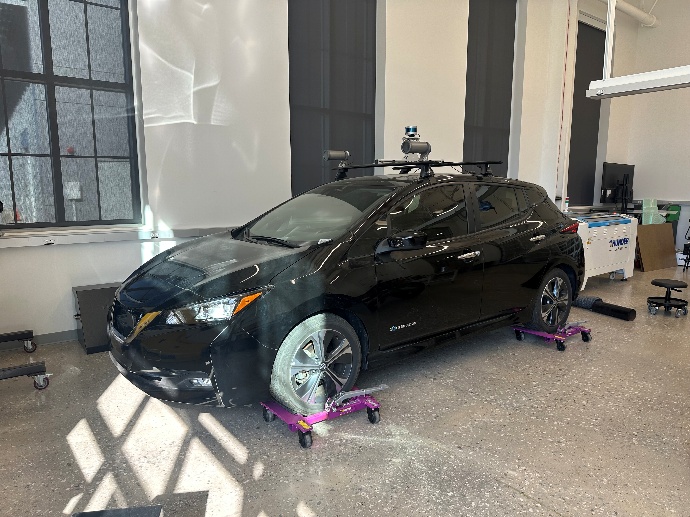
3. Full-Scale Autonomous Vehicle Platforms
The research environment includes access to two Nissan Leaf-based autonomous vehicles equipped with additional sensing, onboard computing, and autonomous-system research capabilities.
These vehicles provide opportunities to investigate the performance and limitations of intelligent autonomy under physical operating conditions, including sensing uncertainty, vehicle dynamics, system latency, and safety constraints.
Experimental use is subject to platform readiness, approved operating conditions, and applicable safety procedures.
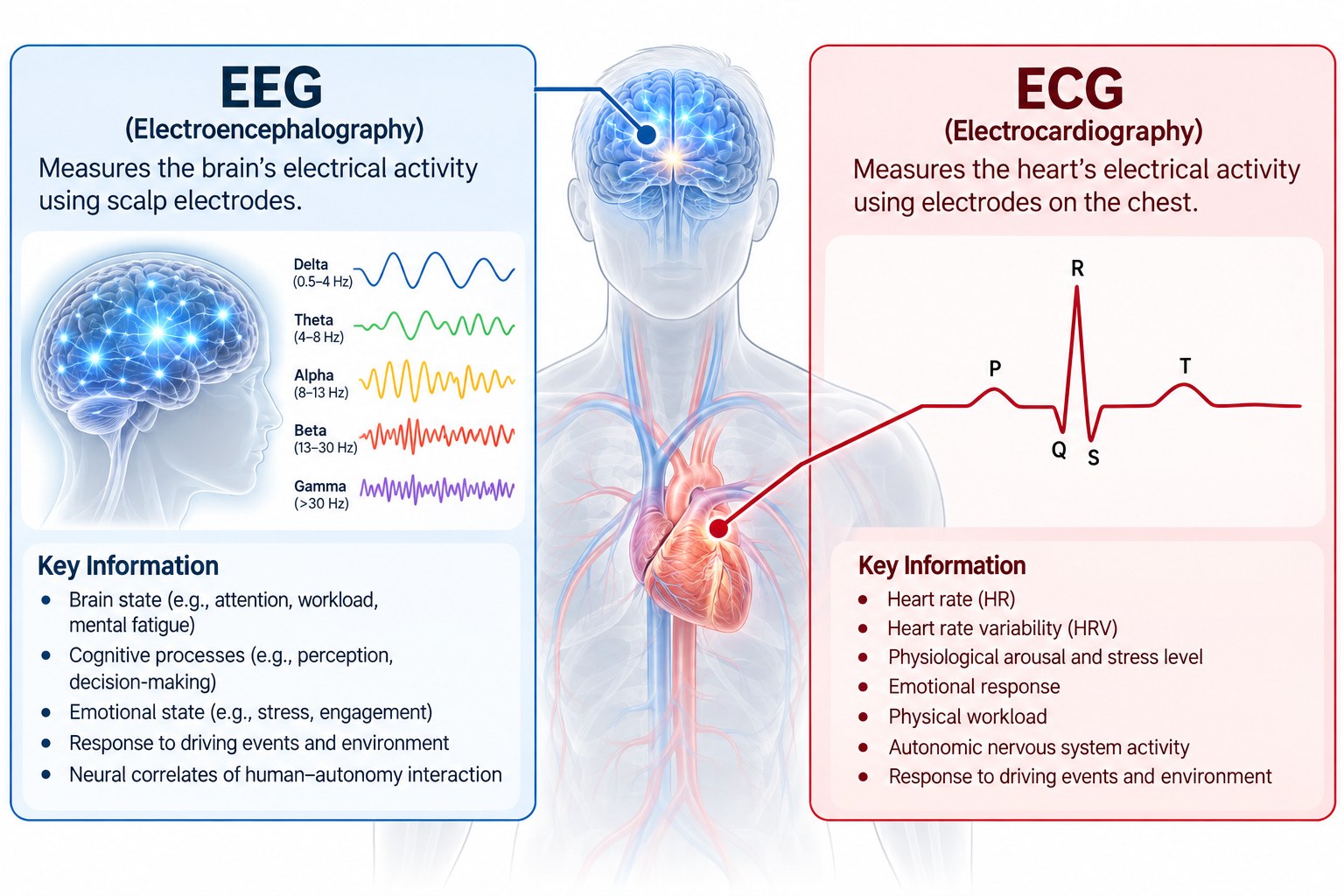
4. Multimodal Human Sensing and Measurement
Our experimental infrastructure is being developed to integrate behavioral measurements with EEG and ECG physiological sensing.
These capabilities are intended to support multimodal studies of human-autonomy interaction by combining observed behavior, physiological responses, and corresponding autonomous-system actions.
5. Vehicle Engineering and EV Resources
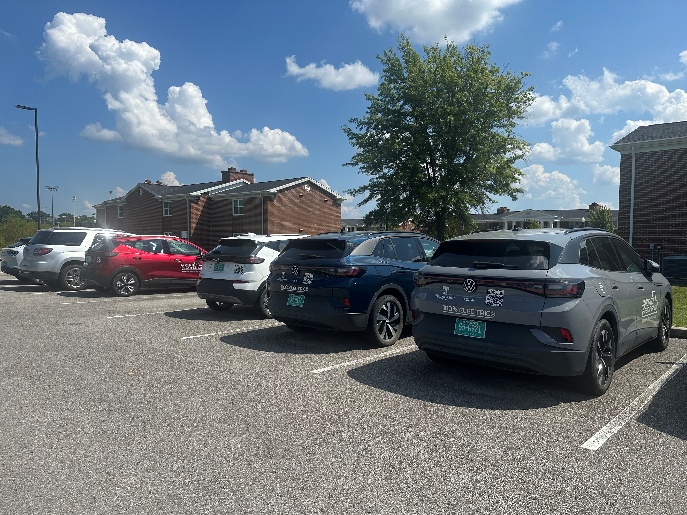
The laboratory has access to a broader supporting electric vehicle fleet, including electric passenger vehicles, SUVs, trucks, and trailers, together with associated charging, instrumentation, automotive powertrain components, and vehicle-support resources.
These facilities provide additional opportunities for vehicle engineering research, system integration, experimental preparation, and engineering education.
6. Computing, Software, and Simulation
Our research draws on computational and simulation resources at Tennessee Tech, including Python-based AI and machine-learning frameworks, MATLAB/Simulink, CARLA, SUMO, and supporting scientific-computing environments.
These resources support algorithm development, simulation, experimental scenario design, data analysis, and integration of virtual and physical autonomous systems.